Challenge
Gas distribution company SGN manages three gas network areas across the UK, safely distributing gas to over six million customers.
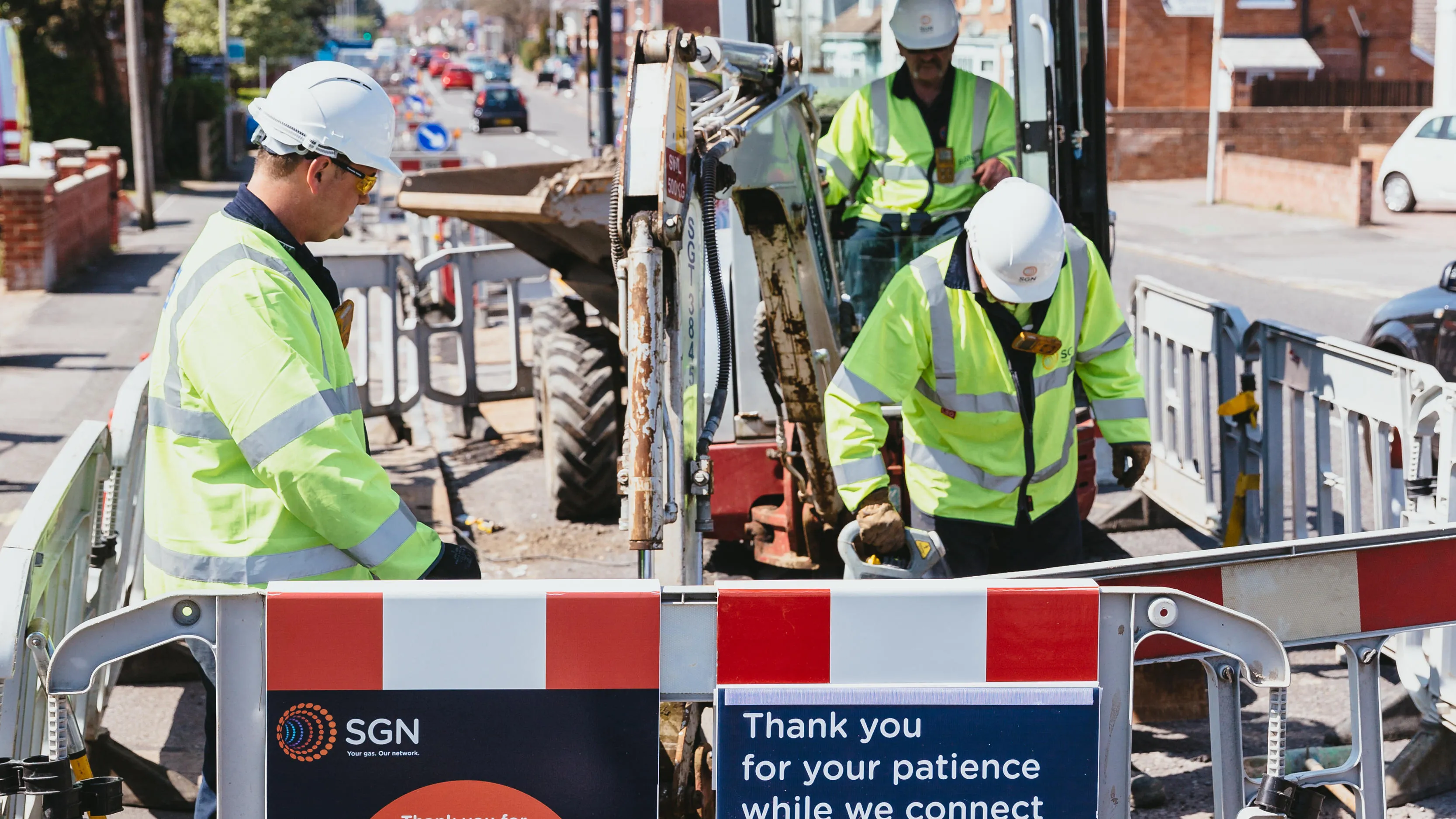
SGN has encountered problems accessing vital utility information when working on day-to-day operations and emergency responses across its network in the south of England. When out on site, field engineers often had issues having to rely on out-of-date utility maps for organisations’ assets, or even areas where there was no utility mapping at all. This resulted in inefficiencies on site and significant losses of productivity waiting to receive asset maps. These challenges also made cable strikes more likely which impacted the safety of its workforce.
Solution
To help solve these issues, SGN worked alongside the National Underground Asset Register (NUAR) Adoption team to take part in a four-week trial. The pilot was undertaken in the Oxford and Milton Keynes areas, which were known for lacking existing utility mapping coverage.
NUAR is a government digital service, operated by Ordnance Survey (OS) that provides instant access to a secure and standardised map of underground pipes and cables in England, Wales and Northern Ireland. By giving SGN access to NUAR, field engineers could log in while on site and instantly access information across a wider coverage and range of buried infrastructure. This includes information from over 360 asset owners, including telecoms, energy, water, transport, local authorities and highway authorities, equating to over 80% of known underground assets.
As part of the pilot, OS supported training sessions with field team leaders to increase awareness of NUAR, provide clarity on how it fits in within their current workflows and highlight the ease of obtaining asset information within the platform. This enabled the field team leaders to brief frontline teams on how to use NUAR, with team managers delivering local reinforcement as required.
During the trial, SGN field engineers had 24/7 access to NUAR, reducing dependency and wait times on retrieving data from the back-office. If an accidental strike were to occur, NUAR would help SGN emergency response times with immediate access to utility data, assisting to speed up safe isolation and restoration of power.
Result
By running a trial pilot involving 80 users including team leaders, first call operatives, engineering managers, and team managers, SGN were able to gather enough insights to build a business case for NUAR. This resulted in NUAR being rolled out company-wide across field teams in seven other regions.
The feedback from key users found the speed of use and instant availability of utility maps increased front line performance. With NUAR, making multiple manual requests to obtain information about assets underground was cut from days to minutes. Further efficiencies came from the standardised view of underground asset data, which simplified the previously complex process of aligning varied formats and scales.
Following the successful trial, internal communications have been used effectively at SGN to raise awareness of NUAR and build support ahead of the wider roll out to field teams. OS and SGN have continued to work together to support multiple in-person and online training, as well as exploring next steps on how SGN can widen the role of NUAR across the organisation going forward.
"NUAR has significantly strengthened our safe digging practices and our commitment to Zero Harm by giving teams in the field instant access to utility mapping. Its simplicity and the support from OS have allowed us to scale adoption quickly across SGN. Our engineers have spoken highly of the system, with feedback such as, ‘Having utilities in one place—it’s like the future. "
If you’d be interested in undertaking a pilot within your own organisation, please contact us and we will be able to connect you with our NUAR team for support.